
02 Sep 2026
Yorkshire Water to begin borehole surveys across Scarborough
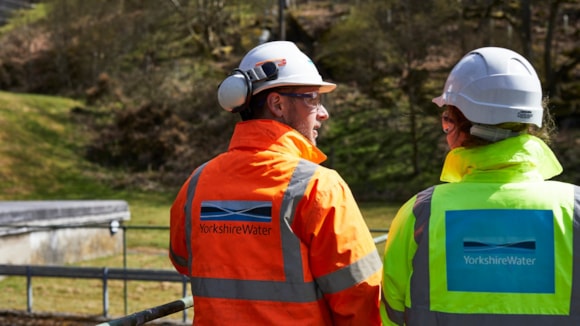
From 7 September, Yorkshire Water will start drilling boreholes in multiple locations across Scarborough, as it progresses ground investigation surveys ahead of its multimillion-pound wastewater transformation project in the town.
Boreholes are 20-centimetre-wide, 80-metre-deep holes drilled into the ground to help understand ground conditions by monitoring water and gas levels in the soil and rock layers.
Lee Shepherd, capital delivery programme manager at Yorkshire Water, said: "We've been surveying the ground conditions in Scarborough for a few weeks already, learning the shape and layout of the land, and finding out what other utilities might be underground with ground penetrating radar equipment. Now, we need to gain a better understanding of groundwater, soil, and rock, and the best way to do this is by drilling boreholes at key points in the town."
The information gathered will help Yorkshire Water decide the best way to make improvements to Scarborough's wastewater infrastructure, and how to do so as safely and efficiently as possible.
During this phase of investigations, contract partners Mott MacDonald Bentley, Socotec, and Central Alliance, are planning to drill 14 boreholes at:
- Northstead Upper Car Park (two boreholes will be drilled in this location)
- Upper Peasholm Park (three boreholes will be drilled in this location)
- Livingstone Road
- Green space between Caledonia Street, Ireton Street, and Gladstone Lane
- The Playcentre car park
- Sainsbury’s car park
- All Saints Road
- Valley Road, Washbeck Close, and St James Road roundabout
- Washbeck Close car park
- Orchard Site on Ashburn Road (two boreholes will be drilled in this location)
Individual boreholes will begin drilling on different dates from 7 September, throughout autumn and winter. Those living closest to individual boreholes have been contacted with specific information regarding localised traffic management and parking restrictions.
After boreholes are drilled, they'll be securely covered with a cap. Over the next 12 months, teams will be visible visiting the sites to collect gas and water samples. Once the monitoring period is complete, the holes will be filled.
Yorkshire Water is also considering a second wave of boreholes across Scarborough, and information will be shared as soon as possible.
Lee added: "Whilst we'll be working as quickly as we can and doing our best to keep disruption to a minimum, we know that this will impact those living and working next to the boreholes, and people driving around Scarborough. We've sent letters with more information to those most affected, and we'd encourage anyone who wants to discuss the work with us to attend one of our webinars and/or visit us in-person at one of our many drop-in events.
"Thank you to everyone in advance for their patience, understanding, and feedback."
Customers can visit the Yorkshire Water project team for information on the surveys and wider project at:
- Peasholm Park, opposite the Buttercup Kiosk (What3Words: W3W ///skin.salads.ship): Wednesday 9 September 2026, 10am to 2pm
- Northstead Upper Car Park (What3Words ///copper.almost.labs): Wednesday 23 September 2026, 10am to 2pm
- Sainsbury's car park (What3Words: ///scope.prices.slang): Wednesday 7 October 2026, 10am to 2pm
- Sainsbury's car park (What3Words ///scope.prices.slang): Wednesday 21 October 2026, 10am to 2pm
Yorkshire Water is also hosting a number of webinars throughout September and October, where customers can learn more about the surveys and wider project. Customers can register on the following links:
- Online drop-in 1: Wednesday 2 September 2026, 6pm to 7pm
- Online drop-in 2: Wednesday 16 September 2026, 6pm to 7pm
- Online drop-in 3: Wednesday 30 September 2026, 6pm to 7pm
- Online drop-in 4: Wednesday 14 October 2026, 6pm to 7pm
- Online drop-in 5: Wednesday 28 October 2026, 6pm to 7pm
Yorkshire Water is continuing to review responses to phase one of the public consultation around the transformation project and will share details of phase two as soon as possible.
To stay up to date with the project, customers can visit www.yorkshirewater.com/investing-in-yorkshire/investing-in-scarborough.
The work in Scarborough forms part of Yorkshire Water’s £8.3bn investment programme by 2030, set to improve customer service, reduce its impact on the environment, and upgrade infrastructure across the region.
Contact Information
Zoe Airey
Media Advisor
Yorkshire Water
zoe.airey@yorkshirewater.co.uk
Yorkshire Water
We’re Yorkshire Water. The people trusted to take care of Yorkshire’s most valuable natural resource. On the surface, we manage and look after the region’s water, coast and countryside. But our work means much more than just providing essential services to over 5 million customers in the region. We’re an integral part of Yorkshire life and millions of people who live and work here rely upon us, every single day.
Our vision is to create a thriving Yorkshire, which is right for customers and right for the environment. Over the next five years, from 2025-2030, we are investing £8.3 billion to improve performance and ensure we deliver for our customers and the environment. It is our largest ever environmental investment, which will provide benefits for decades to come and help Yorkshire’s economy by supporting up to 10,000 jobs. Our plan supports the changes we need to provide safe, clean, great tasting water; deliver value for money to our customers; build and operate efficient infrastructure; reduce pollution; improve river quality and reduce carbon emissions.


Powered by Onclusive PR Manager © 2026